Fruits Patterns. Sweet Vector: Hand-Drawn Charm for Every Project
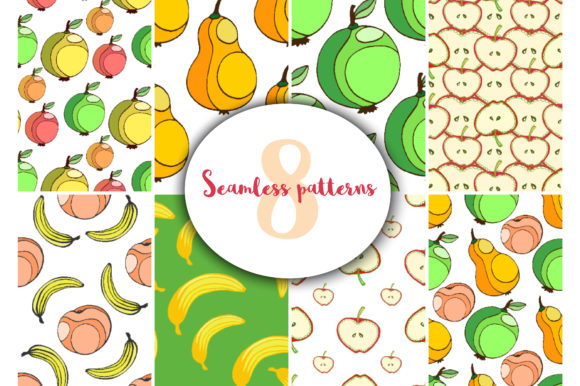
There's something immediately disarming about a pattern that feels drawn by hand. The slight unevenness, the organic flow, the personality that seeps through every curve and line. Fruits Patterns. Sweet Vector captures exactly that energy—a collection of hand-drawn fruit motifs featuring apples, pears, bananas, and peaches arranged into bright, seamless patterns. It's the kind of asset that doesn't just fill space; it sets a mood.
As someone who has worked with design assets across branding, packaging, and digital media, I've learned that the difference between a forgettable project and a memorable one often comes down to texture and personality. Vector patterns that feel mechanical rarely connect with audiences on an emotional level. This collection, however, leans into the warmth of hand-drawn illustration while giving you the technical flexibility of vector files. It's a rare combination.
What Makes This Pattern Collection Stand Out
Let's talk about what you're actually getting. The Fruits Patterns. Sweet Vector set includes eight vector EPS and AI files alongside eight high-resolution JPG files at 300 dpi in RGB color mode. That means you have both editable, scalable vector formats and ready-to-use raster images depending on your workflow.
The visual style is deliberately approachable. Each fruit is rendered with hand-drawn lines—slightly imperfect, charmingly uneven, and full of movement. The color palette leans bright and cheerful without being overwhelming. Apples get their classic reds and greens, pears take on warm yellows and soft greens, bananas curve in sunny yellows, and peaches blush in peachy pinks and oranges. The patterns repeat seamlessly, which is critical for textile design, wrapping paper, and surface design applications.
What I appreciate most is the restraint. These aren't hyper-detailed botanical illustrations, nor are they flat, soulless icons. They sit right in the sweet spot—detailed enough to feel rich, simple enough to remain versatile. The hand-drawn quality gives them a personality that reads as friendly, playful, and approachable. If your brand or project needs to feel warm and human, this style does the heavy lifting for you.
Seasonal and Greeting Card Design
Seasonal designs are an obvious fit. Think spring and summer collections where fresh fruit imagery immediately signals warmth, abundance, and natural energy. Greeting cards for birthdays, thank-you notes, or just-because messages benefit from the cheerful, hand-drawn feel. The patterns work as full-bleed backgrounds, accent panels, or even cut-out elements paired with typography.
Textile and Wrapping Paper Applications
Because the patterns are seamless and the files are provided at 300 dpi, textile applications are a natural use case. Fabric prints for tote bags, aprons, kitchen linens, or children's apparel can carry this pattern without looking repetitive or flat. Wrapping paper is another strong application—the hand-drawn quality makes gifts feel personal rather than mass-produced. Small boutiques and independent shops often struggle to find wrapping materials that reflect their brand personality. This collection solves that problem in one download.
Web Graphics and Social Media
Digital applications benefit from the vector format. You can scale the patterns infinitely without losing quality, which means they work equally well as website background textures, social media post templates, or blog headers. The bright, clean aesthetic reads well on screens, and the hand-drawn style stands out in a sea of overly polished stock imagery. For content creators who need consistent visual branding across platforms, having one pattern set that scales everywhere simplifies the workflow considerably.
Scrapbooking and Crafting
The personal and hobbyist audience shouldn't be overlooked here. Scrapbookers and crafters often work with printed materials, and the JPG files at 300 dpi print cleanly at home or through a print service. The hand-drawn fruit motifs work beautifully in memory books, party decorations, or custom gift tags. There's a growing market for digital crafting assets that don't look generic, and this collection delivers that handmade feel without requiring you to draw anything yourself.
How Pattern Design Influences Brand Perception and Engagement
Patterns are often treated as decorative afterthoughts, but in practice, they carry significant weight in brand identity. A pattern like Fruits Patterns. Sweet Vector communicates specific things about your brand before anyone reads a single word of copy.
The hand-drawn quality signals authenticity. In an era where consumers are skeptical of overly polished corporate aesthetics, imperfect lines read as honest and human. The bright colors signal optimism and energy. The fruit motifs themselves tie into themes of health, nature, abundance, and simplicity. If your brand touches any of these themes—whether you run a juice bar, a children's book publishing house, a natural skincare line, or a food blog—this pattern style reinforces your message visually.
From a visual hierarchy standpoint, patterns work best when they support your primary content rather than compete with it. Because these fruit patterns have a consistent scale and even distribution, they function well as background textures behind text. The hand-drawn lines add visual interest without creating distracting contrast. For packaging design, the pattern can wrap around a product while a clean sans serif or serif font sits on top for the product name and details. The pattern adds richness; the typography adds clarity.
Consistency is another benefit. Using one pattern family across packaging, social media, website design, and print materials creates a cohesive brand experience. Customers recognize the visual language even when they encounter your brand in a new context. This kind of recognition builds trust over time, and trust directly influences engagement and conversion rates.
Evaluating Project Fit
Before you purchase any design asset, it pays to ask specific questions. Does your project need a bright, cheerful tone? Will the patterns be used at a scale where the hand-drawn details remain visible? Are you working on seasonal designs or evergreen products?
Fruits Patterns. Sweet Vector is an excellent fit for projects targeting children, families, health-conscious audiences, or anyone who responds to warm, playful visuals. It works less well for corporate, luxury, or minimalist applications where a more restrained or geometric pattern would be appropriate. Knowing your audience and your brand positioning before you choose a pattern saves you from forcing a round peg into a square hole.
Testing Font Pairings with the Pattern Style
Because the pattern is hand-drawn and bright, the typography you pair with it matters. A clean sans serif font tends to balance the organic pattern lines and keeps the overall design readable. Think of fonts like Montserrat, Lato, or Proxima Nova for digital applications. For packaging or editorial design, a friendly serif font can add warmth without competing with the pattern's personality.
Avoid pairing this pattern with overly ornate script fonts or heavily decorative typefaces unless you're going for a maximalist look. The hand-drawn pattern already carries significant visual texture. Your typography should provide contrast and clarity rather than adding more busyness. When in doubt, test your font choice against a small section of the pattern before committing to the full layout.
Understanding the Included Formats and Licensing
The eight vector EPS and AI files give you full control over color, scale, and composition. You can pull individual fruit elements, rotate them, change colors, or create custom layouts. The eight JPG files at 300 dpi RGB are print-ready and work immediately in most design software. Having both formats means you're covered whether you're a seasoned vector artist or someone who just needs a ready-to-use background.
Commercial licensing is critical if you're creating products to sell. The collection is labeled for commercial use, which means you can use the patterns on merchandise, packaging, digital products, and other revenue-generating projects. Always confirm the specific license terms from your source before launching products, but the standard expectation for this type of vector collection is broad commercial permission.
Design Observations and Recommendations
One thing I've noticed working with hand-drawn vector patterns is that they often look better when used at a slightly larger scale than you might initially expect. If the repetition becomes too small, the individual fruit details blur together and the pattern reads as a generic texture. Let the apples, pears, bananas, and peaches breathe at a size where viewers can actually appreciate the hand-drawn line quality.
For wrapping paper or textile applications, consider rotating elements or creating a half-drop repeat for a more dynamic layout. The seamless files are already engineered to repeat cleanly, but you can remix them for custom projects without worrying about visible seams.
If you're using the patterns in web design, test them at different screen sizes. A pattern that looks perfect on desktop may feel overwhelming on mobile if the scale isn't adjusted. The vector format makes this easy—simply scale the pattern down or adjust opacity to keep it supportive rather than dominant.
For bloggers and content creators, these patterns work exceptionally well as Pinterest pin backgrounds, Instagram story fills, or YouTube thumbnail textures. The bright colors and friendly motifs increase the likelihood of engagement on visual platforms. Pair them with clean overlays and bold typography to create shareable graphics in minutes rather than hours.
Fruits Patterns. Sweet Vector is more than a collection of seamless repeats. It's a design shortcut to warmth, approachability, and human connection. Whether you're launching a seasonal product line, refreshing your brand's visual identity, or building a library of assets for ongoing creative work, the hand-drawn fruit motifs give you a foundation that feels personal without requiring you to start from scratch. That's the kind of resource every designer, marketer, and creator should have in their toolkit.