Love Abstract Graphic Patterns Find Their Place in Everyday Creativity
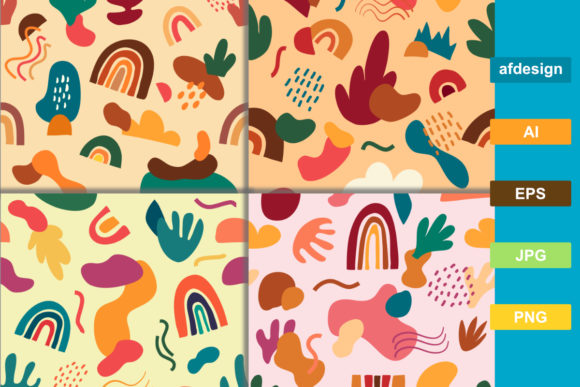
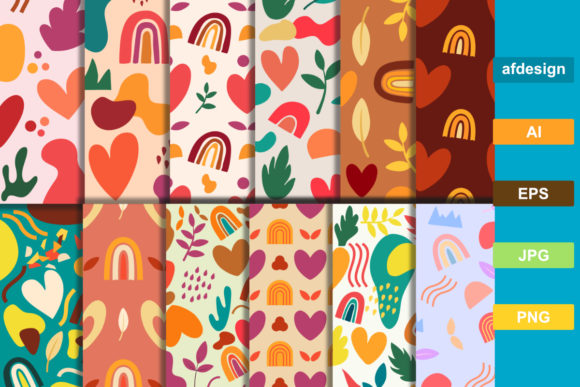
There is something magnetic about patterns that combine emotion with design. Love Abstract Graphic Patterns bring together heart motifs, fluid graphic shapes, rainbow gradients, and organic natural forms into seamless repeating tiles. Whether you are building a digital paper collection, designing accessories, or preparing fabric for a small production run, these patterns offer a flexible starting point that feels both personal and polished.
What makes them stand out is how they balance sentiment with structure. Hearts can easily tip into cliché, but when they are abstracted — stretched, layered, or grouped with geometric elements — they become versatile. You can use them in ways that feel modern, not overly romantic. That opens up possibilities for people who might not normally reach for heart-themed designs.
When Heart Motifs Make Sense Beyond Valentine's Day
Most creatives associate heart patterns with February, but Love Abstract Graphic Patterns stretch far beyond seasonal use. Consider a lifestyle blogger launching a printable sticker shop. Heart motifs in soft abstract forms work for bullet journal covers, habit trackers, and mood boards. They add warmth without screaming holiday. Someone planning a small accessory line — scrunchies, tote bags, or phone cases — can rotate between the rainbow abstract set for pride collections and the natural shapes for earthy, grounded looks.
Fabric printers often face the challenge of finding patterns that look good at scale. A small heart motif that repeats tightly might feel overwhelming on a dress but perfect on a pillow. With multiple file formats included — afdesign, AI, EPS, JPG, and PNG — you can test the same pattern on different mockups before committing. That flexibility matters when you are sampling for clients or preparing multiple product variations.
I have seen small business owners use these patterns for everything from custom wrapping paper to digital wall art for children's rooms. The abstract rainbow shapes, in particular, work well for gender-neutral nursery décor. Parents appreciate designs that feel playful without being tied to traditional pink or blue.
Different Users, Different Approaches to the Same Patterns
A graphic designer working on a branding project might take a completely different angle than a hobbyist scrapbooker. The designer can open the AI or EPS file, pull individual elements, and rebuild them into a custom logo pattern or social media template. The abstract shapes become building blocks rather than finished products. Meanwhile, a hobbyist using the JPG or PNG files can simply drag and drop into their favorite software — Canva, Procreate, or even Microsoft Word — and start creating immediately.
This dual-entry point is one of the stronger aspects of the collection. You do not need advanced software skills to benefit from it. If you are a teacher preparing classroom décor or a parent making personalized birthday banners, the ready-to-use PNG files (with transparent backgrounds) save hours of manual work. Just resize, print, and cut.
One observation worth noting: the natural abstract shapes tend to work best for adults creating items for themselves — like planner stickers or laptop skins — while the heart motifs appeal heavily to those making gifts or products for others. There is an emotional layer to giving something handmade, and patterns that already carry a love theme amplify that sentiment without effort.
Considerations Before You Start Printing or Publishing
Before you commit to a specific pattern set for a commercial project, think about scale and repetition. Seamless patterns look flawless in digital previews, but when you print them on fabric or large-format paper, the repeat structure becomes visible. Test a small sample first. The JPG files included (12 of them) give you plenty of options to run quick tests without opening vector software.
Color accuracy is another factor. Rainbow abstract shapes can shift depending on the printer and material. If you are printing on dark fabrics, expect the colors to appear slightly muted unless you use a white underbase. For digital paper packages, color stays truer because screen calibration is more predictable. I recommend checking your monitor calibration before making final design decisions, especially if you are selling digital downloads.
File format also matters depending on your workflow. The afdesign file is perfect if you use Affinity Designer — you get full editability with layers intact. The AI and EPS files cover Adobe users and those working with vector editing tools. The 12 JPG and 12 PNG files serve two distinct purposes: JPGs for quick previews and placement, PNGs for transparent overlays on already-colored backgrounds. Having all five formats means you can move between software without format friction.
Where These Patterns Shine in Real-world Projects
Let me walk through a few scenarios I have seen work well:
- Small accessory brands: A local accessory maker used the abstract heart patterns on canvas pouches and cosmetic bags. They sold best at craft fairs where shoppers were looking for unique, non-mass-produced designs. The seamless nature of the patterns eliminated visible seams or awkward cutoffs.
- Digital product creators: One Etsy seller bundled the rainbow abstract shapes into a digital paper pack for card making and journaling. They marketed it as "abstract love" to appeal to both romantic and creative audiences. The bundle sold steadily throughout the year, not just around Valentine's Day.
- Fabric designers testing the market: A surface pattern designer used the EPS files to experiment with color variations before ordering custom printed fabric. She created three color ways — rose-toned, neutral beige, and bold rainbow — and tested them on small yardage before investing in larger runs.
- Event planners: For a wedding welcome bag, one planner printed the natural abstract shapes on Kraft paper tags and paired them with simple twine. The organic look complemented a rustic theme without overwhelming the other stationery.
Each of these examples shows how the same collection of patterns serves completely different end goals. The key is matching the pattern style to the emotional tone of the project. Heart motifs work for intimate, personal items. Rainbow shapes fit celebratory or inclusive messaging. Natural shapes ground a design in calm, earthy aesthetics.
Strengths Worth Noting
The collection's strongest asset is its format variety. You are not locked into one ecosystem. If a client asks for a last-minute change and you only have a PNG, you can still deliver a usable file. The abstract nature of the patterns also means they age well. Trends shift, but shapes that are not hyper-realistic or trend-driven stay relevant longer. I have seen pattern collections lose appeal after a season because they were too literal. Abstract love patterns avoid that trap because they leave room for interpretation.
Another strength is the emotional accessibility. People respond to hearts and rainbows on a visceral level. Even when abstracted, these symbols carry immediate meaning. That is useful for marketing, packaging, and any context where you want to create a quick emotional connection with the viewer.
Potential Limitations to Keep in Mind
No product is perfect for every use case. Love Abstract Graphic Patterns might not suit corporate or minimalist branding. If a client requires strictly geometric, monochromatic, or highly technical patterns, the organic and thematic nature here could feel out of place. Similarly, if you are designing for a male-skewed audience or a very formal product category (like legal documents or industrial packaging), heart motifs — even abstract ones — may not align with the tone.
Color versatility is generally strong, but the rainbow set relies on multiple hues. If you print on a limited-color press (like one or two spot colors), you might lose the gradient effect. Vector files help because you can simplify the color palette, but that requires editing skills. If you are not comfortable adjusting vectors, stick with the JPG or PNG files that already reflect the intended look.
One practical tip: always check the resolution of the JPG files before printing large-scale items. The included JPGs are likely optimized for standard digital paper sizes, but if you want a mural or large banner, you may need to scale the vector files and export at higher resolution. The 12 PNG files are great for layering in digital projects, but they work best when you need transparency — they are not automatically print-ready at large sizes without upscaling.
Making the Most of the Five File Types
If you are new to working with multiple formats, here is a simple breakdown of when each one helps most:
- afdesign file: If you use Affinity Designer, this gives you total control. Adjust colors, scale elements, or isolate individual shapes. This is the most flexible format for advanced editing.
- AI file: Adobe Illustrator users can treat this as their primary editable source. Ideal for creating color variations or combining patterns with other vector elements.
- EPS file: Works across many vector programs and older software versions. A safe fallback if you are sharing files with collaborators using different tools.
- 12 JPG files: Best for quick previews, mockups, and any project where you do not need transparency. Ready to drop into documents, social media graphics, or print templates.
- 12 PNG files: Transparent backgrounds make these perfect for overlays, digital scrapbooking, or placing patterns over photos and colored backgrounds. Great for layered compositions.
Having all five in one purchase saves the back-and-forth of converting formats yourself. If you have ever spent an hour trying to export a pattern at the right resolution for a client, you know how valuable that convenience really is.
If you have specific questions about which format to use for your printer or software, I am always happy to help. Drop a comment or send a message, and I will point you in the right direction. And if you found this useful, give a like 😊 — it helps others discover these patterns too.